Blog·
What missing middle housing means for site selection
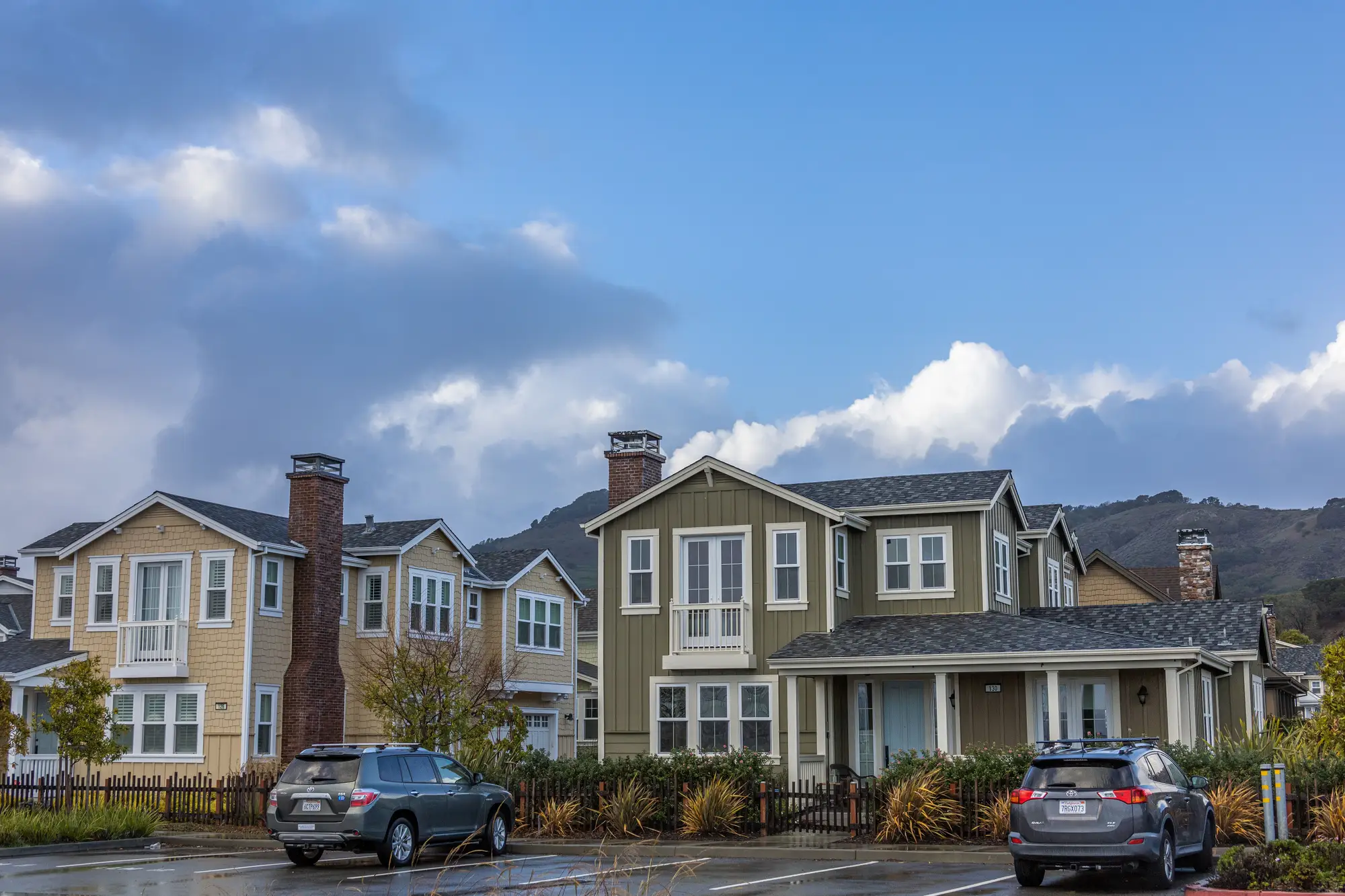
What missing middle housing means
Missing middle housing is the band of building types between a single detached house on its own lot and a mid-rise apartment block: duplexes, triplexes, fourplexes, courtyard bungalows, small walkups, live-work rowhouses. The term comes out of urban planning, coined to describe the gap in what most zoning codes permit. A given lot gets one house, or it gets a five-story building with a parking podium. The stuff in between, the stuff that used to get built everywhere before mid-century zoning wrote it out of the code, mostly stopped.
For a planner, that gap is a housing policy problem. For a site selection analyst, it's a density signal sitting right outside your candidate site, and most trade area reports never mention it.
Why it matters for a candidate site
Two trade areas can carry identical population counts and nearly identical median income and still support different retail. One is a stretch of single-family lots, each house holding one household, sidewalks mostly empty between school pickup and dinner. The other is the same acreage built out in duplexes and fourplexes, a few converted carriage houses, a triplex or two mixed in. Same rooftop count by the census block, but two or three times the households per acre, and more units within a real walk of a corner lot.
Density drives frequency. A fourplex on a corner puts four households within a hundred feet of your site instead of one. A block of duplexes sends roughly twice the walk-up trade a block of same-size single-family homes would. If your model runs on population and income radii without resolving what's built on the ground, you're scoring a street of fourplexes the same as a street of ranch houses on half-acre lots, and the two don't pull the same on a lunch counter, a laundromat, or a corner grocery.
This is also where candidate sites get mis-scored by inertia. An analyst remembers a submarket as single-family because that's what it was the last time anyone drove it, but infill happens lot by lot and doesn't show up in a demographic refresh for years. A duplex conversion or a fourplex going up mid-block won't move the census numbers on any near-term timeline. Catching that shift between refresh cycles means reading the built environment directly, since the census won't.
Reading it from imagery instead of guessing
You can't always tell duplex from fourplex from a street view on a map, and you can't drive every trade area in the pipeline. High-res imagery read for building footprint, roofline breaks, and lot coverage gives you a density read without a field visit: structures per acre, how many look multi-unit versus single-family, what the land use mix looks like around the parcel. That's a built-form proxy for demand, not a demographic one, and it catches missing middle inventory a standard demographic pull won't flag because the census tract hasn't caught up to what went up last year.
Trade Area Profiling reads that imagery per candidate site and returns a numbered brief: housing type mix, density, land use breakdown, built on request rather than a fixed refresh schedule. That's the piece a lot of site packages skip, since sending a field team to eyeball rooflines on every candidate in the pipeline doesn't scale.
The short version
Missing middle housing is the duplex-to-small-apartment range that most zoning either never allowed or quietly phased out, and it's dense enough to change how a trade area pulls without ever showing up as a different population number. If two candidate sites look identical on paper, the housing type mix sitting within walking distance is one of the places the real difference is hiding.
If the demographic pull on your next candidate site isn't telling you what's actually built around it, that gap is worth closing before you commit to the location.