Blog·
Mobile home park vs. manufactured housing subdivision in satellite imagery
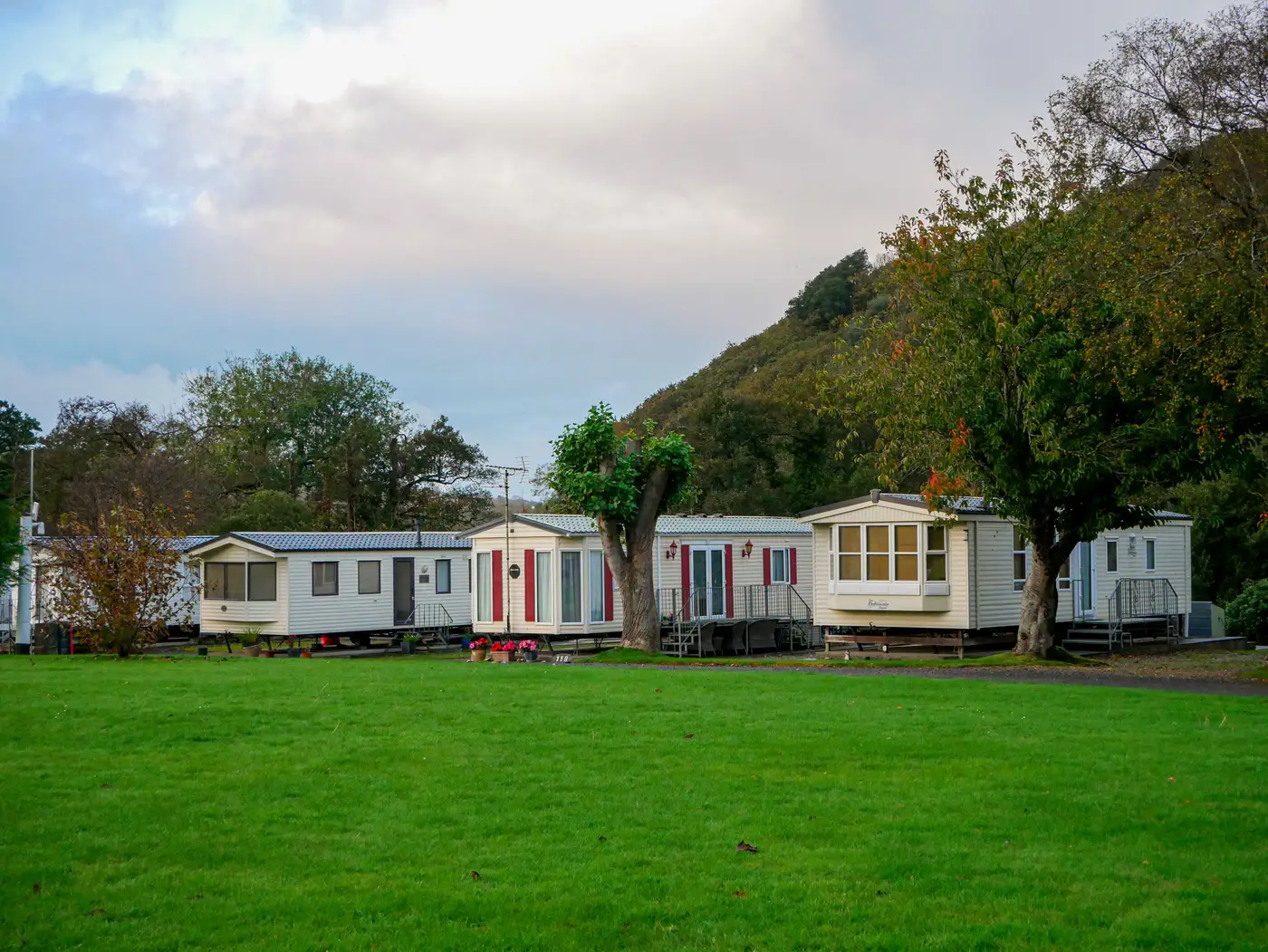
When you're scoring a candidate site, housing type is one of the first filters you run against the trade area. And on an aerial frame, manufactured housing can look like one undifferentiated gray blob of rectangular roofs until you know what you're looking at. The problem is that a rental mobile home park and a platted manufactured housing subdivision are different demand proxies entirely. Different household formation, different turnover, different disposable-income signal. Lump them together in your housing type mix and the retail format call built on top of it starts from a bad number.
What actually separates a park from a subdivision on the image
Start with lot and unit geometry. In a rental park, coaches sit on narrow, uniform rectangular pads, nose-in or side-by along one or two internal drives, spaced on something like 25 to 40 foot centers. Unit length barely varies, because the operator is filling a standard pad size. A manufactured housing subdivision reads closer to a conventional neighborhood: individually platted lots, often a quarter acre or more, with additions that break the rectangular silhouette, carports, attached decks, detached sheds, a second structure out back. Those additions are the tell. A renter doesn't build a shed on someone else's pad.
Street pattern is the second signal. Parks typically run on one or two loop drives off a single entrance, sometimes gated, with angled parking spurs instead of a public right-of-way. A subdivision carries the full curvilinear street network of a platted development: cul-de-sacs, sidewalks, occasionally a retention pond at the low corner of the parcel. If you can trace a street grid with house numbers implied by spacing, you're almost certainly looking at individually owned lots, not a park.
Then there's the ownership tell you can read without pulling assessor records. Uniform roof color and identical unit spacing across the whole parcel points to single ownership, the park operator maintaining a standard product. Mixed roof materials, inconsistent setbacks, and visible variety in additions and fencing point to individual lot owners, which is the subdivision case. Stack it with the street pattern and lot geometry and you can make the call without a field visit.
Reading the density signal for a retail format call
Classification is only useful if you turn it into a number you can use. Count units per acre using the parcel boundary itself as the denominator, since the half-mile ring around it will wash out the signal with whatever's next door. Rental parks commonly run 8 to 12 units per acre on the pad footprint, dense enough to throw off a drive-time density calc if you miscount it as site-built single-family. Manufactured housing subdivisions, even tight ones, rarely run below 3 to 5 units per acre once you account for individual yards and setbacks.
A convenience-format tenant evaluating a corner against a trade area anchored by a mobile home park is pricing against 8 to 12 units per acre and the household income band that typically comes with rental manufactured housing. The same tenant evaluating a site anchored by a manufactured housing subdivision with quarter-acre lots is pricing against 3 to 5 units per acre and an owner-occupied income band that usually runs higher. Get the classification wrong and your rooftop count for the draw area is wrong before you've even opened a demographic table.
None of this replaces a parcel pull or a zoning check. What it does is get the housing type mix right on the first pass, so the land use breakdown you hand off actually reflects what's built on the ground rather than a county land use code that hasn't been updated since the park was platted. A numbered brief on a candidate site works through exactly this kind of read, housing type, density, and land use together, built from current imagery rather than records that lag the build.
If you're scoring a site near manufactured housing and want that distinction made for you, request a profile for the parcel.